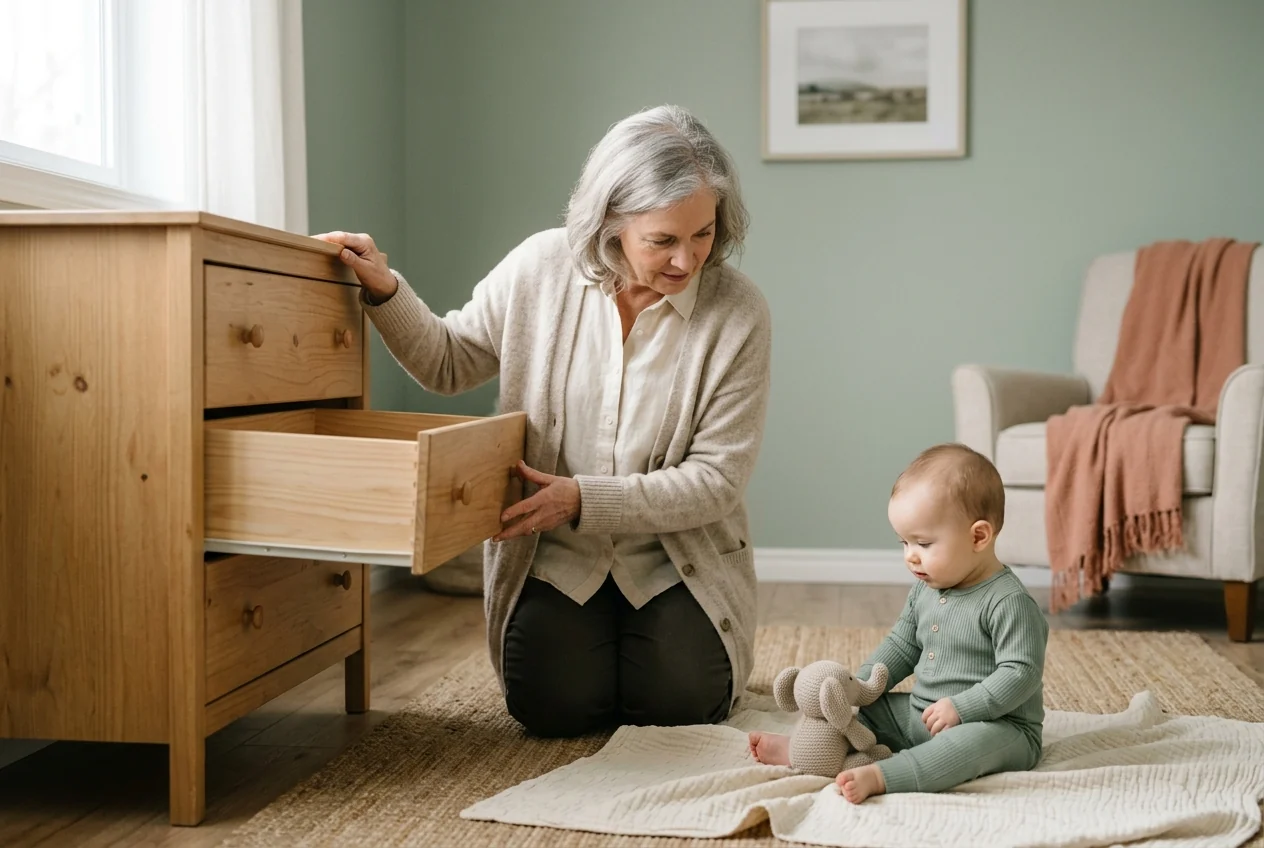
Preparing Grandma's house for a baby does not require a second nursery. It requires a small, dependable set of basics for the moments that happen during real visits: a diaper change, a wet outfit, a longer afternoon than expected, or a diaper bag that arrived without the one item everyone needs.
Start with the visits you actually expect
Before buying gear, talk about what a normal visit will look like. A two-hour Sunday lunch needs a different setup than a full day of caregiving. Ask how often the baby will visit, whether a parent will usually stay, and which supplies the parent expects to bring every time.
This keeps the list practical. The goal is not to prepare for every possible situation. The goal is to make the common situations easier without filling closets with products that may never be used.
Build one ready changing zone
A changing zone can be a drawer, basket, or labeled box near a sturdy surface. Keeping everything together matters more than buying special furniture. When a change is needed, nobody should have to search three rooms for wipes, a fresh diaper, and somewhere to place the used one.
- A small supply of diapers in the baby's current size
- A few wipes for ordinary changes
- A portable changing pad to protect the surface
- Disposable bags or another agreed-upon way to contain used diapers
- A spare bodysuit or simple outfit
- A burp cloth or washable cloth
- Hand-cleaning supplies near the changing area
For the gift-sized version of this list, see what goes in a grandparent starter kit.
Keep simple clothing backups by stage
A spare outfit is useful even on short visits. Choose easy, neutral basics rather than occasion clothes. Early baby sizes change quickly, so label each item clearly and review the drawer as the baby grows.
One basic garment in several early stages can be more practical than a stack in one size. It gives Grandma something clean to reach for after a leak, spill, or unexpected overnight delay without pretending to replace the clothing packed by the parent.
Decide what should still travel with the parent
Some things should not become generic house supplies. Feeding items, medication, personal care products, comfort items, and any equipment used for sleep or transportation should follow the family's current instructions and the baby's individual needs. Parents should provide those items or specifically approve what stays at the house.
A useful house kit handles ordinary changing and clothing gaps. It does not replace the parent's diaper bag, care instructions, or safety equipment.
Choose one visible, easy-to-check home
Put the backup supply in one predictable place, such as a guest-room closet, hallway cabinet, or shelf near the changing area. Label it clearly. If several people help with the baby, everyone should know where it lives.
Avoid scattering a few diapers in the bathroom, clothes in the guest room, and wipes in a kitchen drawer. A single home makes it easier to use the supplies and easier to notice what needs replacing.
Use a five-minute restocking routine
After a visit, open the box or drawer before everyone leaves. Replace what was used, remove anything the baby has outgrown, and confirm that wipes are still sealed and clothing is clean. A simple note on the inside of the lid can record the current diaper and clothing size.
Review the setup at each new clothing or diaper stage. The best Grandma's-house kit is not the biggest one. It is the one that is current, easy to find, and ready for the next ordinary surprise.
Frequently asked questions
How many diapers should Grandma keep at her house?
Keep enough for the length and frequency of typical visits, then restock after use. A small current supply is often more useful than a bulk package that the baby may outgrow.
Does Grandma need a complete second nursery?
Not for ordinary short visits. Start with changing supplies, a clothing backup, and the specific equipment the family has agreed is needed for longer care.
How often should the supplies be checked?
Check them after each visit and whenever the baby changes diaper or clothing sizes. Remove opened, expired, damaged, or outgrown items.